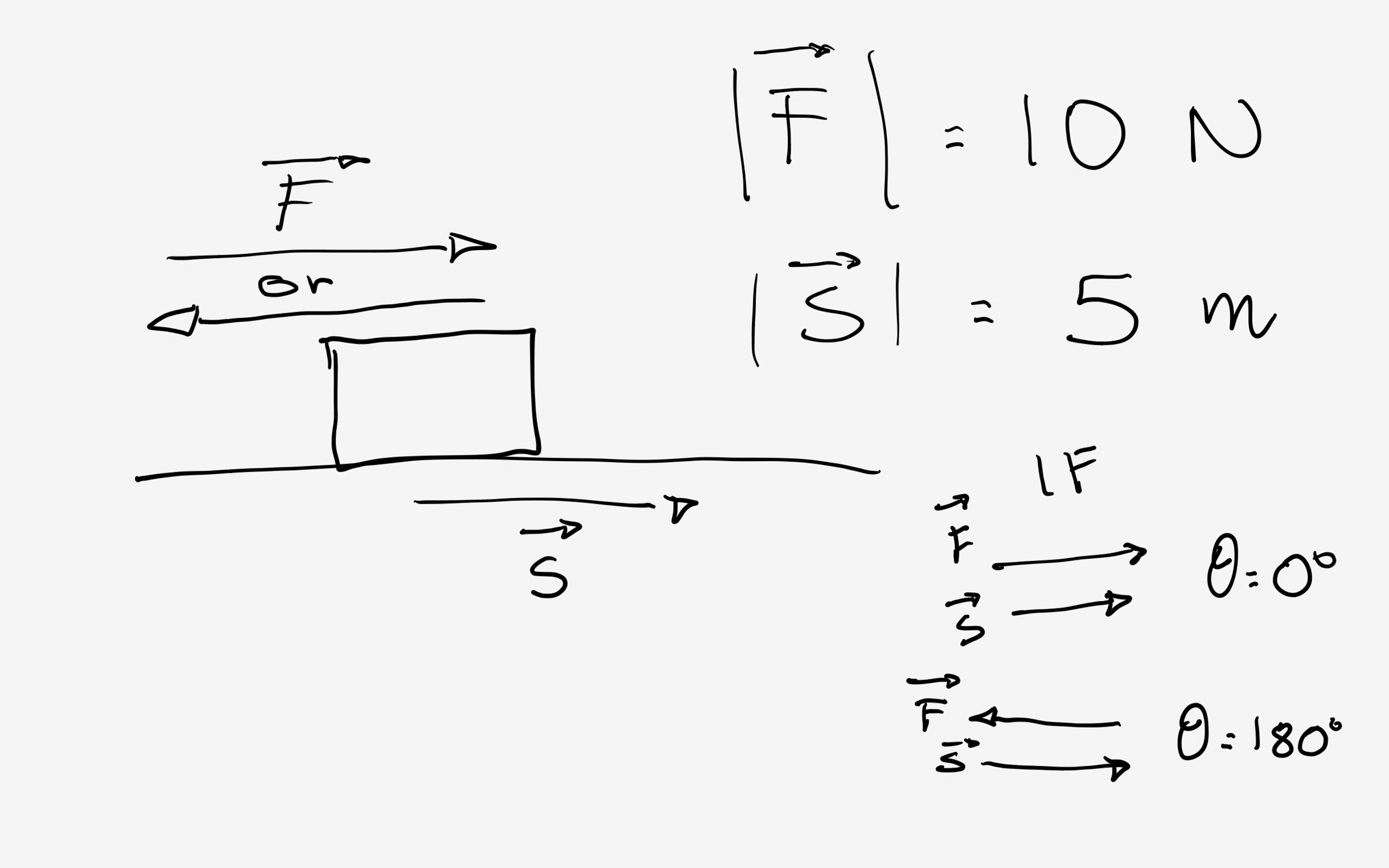
-
-
Measures the extent to which vectors align or go in the same direction, indicating their parallelism taking into account their direction(large positive numbers being more similiar and small positive or negative numbers going in different direction of less similiar)
- If vector A is the hypotenuse of a right triangle and vector B is another vector, the dot product reveals how much of vector A projects onto vector B which symbolizes the shadow cast by vector A onto vector B when illuminated by a hypothetical light source more in depth explination
- vectors have both a magnitude and direction
* magnitude is like how much or
* like the distance away from 0
* can be thought of as absolute value or
* squared value because it results in positive
- Direction is like which way
- like up, down, left, right
- An example
- start=0
- left(<-) is defined as positive (opposite of what we usually think)
- right(->) is defined as negative (opposite of what we usually think
- if a person walks 10 steps to the left <- from start then it can be represented as +10
- if a person walks 10 teps to the right -> from start then it can be represented as -10
- magnitude does not take into consideration direction so 10 steps is 10 steps regardless of it is to the left or right of start meaning that the magnitude of the +10 and the -10 are both 10
- if move 10 steps to left first then 10 steps right then
- mgnitude of stpes is 10+10=20 total steps taken
- direction does take into consideration which way that 10 steps is walked so in our example left 10 is +10 and right 10 is -10
- if move 10 steps to left first then 10 steps right then
- direction from start is 10-10=0 which means even though you took 20 steps technically you didn't move in any direction away from start
- Direction is like which way
-
using vectors A=[3,4], B=[7,5], C=[-3,-4] with A as our refrence and left <- is negative right -> is positive
-
magniudes between (distance) points in vectors
-
A,B
- total distance
- d=√((x2 - x1)2 + (y2 - y1)2)
- (x2 - x1)2 lets create a new varible to contain this value call it x3
- x2 - x1 = 7 - 3 = 4
- 42 = 16 == x3
- (y2 - y1)2 lets create a new varible to contain this value call it y3
- y2 - y1 = 5 - 4 = 1
- 12 = 1 == y3
- √((x2 - x1)2 + (y2 - y1)2) == √(x3 + y3)
- √(x3 +y3) = √(16+1)= √17=~4
- (x2 - x1)2 lets create a new varible to contain this value call it x3
- d=√((x2 - x1)2 + (y2 - y1)2)
- total distance
-
A,C
- total distance
- d=√((x2 - x1)2 + (y2 - y1)2)
- (x2 - x1)2 lets create a new varible to contain this value call it x3
- x2 - x1 = -3 - 3 = -6
- (-6)2 = 36 == x3
- (y2 - y1)2 lets create a new varible to contain this value call it y3
- y2 - y1 = -4 - 4 = -8
- (-8)2 = 64 == y3
- √((x2 - x1)2 + (y2 - y1)2) == √(x3 + y3)
- √(x3 + y3) = √(36+64)= √100=10
- (x2 - x1)2 lets create a new varible to contain this value call it x3
- d=√((x2 - x1)2 + (y2 - y1)2)
- 10>4 so distance A,C > A,B
- total distance
-
-
directions between points in vectors
-
A,B
- sin example when to use and what means
- cos
- tan
- arcsin
- arccos
- arctan
-
A,C *
-
-
-
- indicates how close
-
some text in p2 paragraph (under H2)
EBYEMJC1/cheem-group-winter-project
Folders and files
| Name | Name | Last commit date | ||
|---|---|---|---|---|