A pydantic powered universal ORM wrapper for databases.
This is a python package I created to reuse some functionalities I have had to implement in multiple jobs. For some reason, there aren't any ORM wrappers we can just plug and play. This should help in that area to some extent. I am trying to make it as generalized as possible but data storage services that require paid access may never be part of this package.


now = datetime.now()
data1 = {
    "n": "xin",
    "id": 200,
    "f": ["a", "b", "c"],
    "c": now,
    "b": 20.0,
    "d": {"a": 1},
    "e": [[1]],
}
data2 = {
    "n": "xin",
    "id": 200,
    "f": ["d", "e", "f"],
    "c": now,
    "b": None,
    "d": {"a": 1},
    "e": [[2]],
}

pydantic_objects = await serialize_table(table_name="some_table", data=pd.DataFrame(data=[data1, data2]))class DummyModel(BaseModel):
x: int
y: float
models = [DummyModel(x=1, y=2.0), DummyModel(x=10, y=-1.9)]
df = await deserialize_pydantic_objects(models=models)data = [
{
"id": 1,
"name": "Cole Volk",
"fitness": {"height": 130, "weight": 60},
},
{"name": "Mark Reg", "fitness": {"height": 130, "weight": 60}},
{
"id": 2,
"name": "Faye Raker",
"fitness": {"height": 130, "weight": 60},
},
]
df_pandas = pd.DataFrame(data=data)
df_polars = pl.DataFrame(data=data)
flat_df = await flatten(data=df_pandas, depth=0)
flat_df = await flatten(data=df_polars, depth=0)
flat_df = await flatten(data=df_polars, depth=1)def mongo_client() -> Generator[MongoClient, None, None]:
client = nosql_client(
user=os.environ["MONGO_USER"],
password=os.environ["MONGO_PASSWORD"],
host=os.environ["MONGO_HOST"],
dialect=NoSQLDatabaseDialect.MONGODB,
)
yield client
client.close()documents = [{"name": "test1"}, {"name": "test2"}]
object_ids = insert_into_collection(
documents=documents, client=mongo_client, dbname="test", collection_name="test"
)
df = find_in_collection(
query={}, client=mongo_client, dbname="test", collection_name="test"
)Create the engine:
async def mysql_engine() -> AsyncGenerator[AsyncEngine, None]:
    engine = await async_sql_engine(
        user=os.environ["MYSQL_USER"],
        password=os.environ["MYSQL_PASSWORD"],
        port=int(os.environ["MYSQL_PORT"]),
        dialect=SQLDatabaseDialect.MYSQL,
        host="localhost",
        dbname=os.environ["MYSQL_DBNAME"],
    )

    yield engine
    await engine.dispose()
Make query:
query = "SHOW DATABASES"
df = await async_query_with_result(query=query, engine=mysql_engine)Create the engine:
async def postgres_engine() -> AsyncGenerator[AsyncEngine, None]:
    engine = await async_sql_engine(
        user=os.environ["POSTGRESQL_USER"],
        password=os.environ["POSTGRESQL_PASSWORD"],
        port=int(os.environ["POSTGRESQL_PORT"]),
        dialect=SQLDatabaseDialect.POSTGRESQL,
        host="localhost",
        dbname="postgres",
    )

    yield engine
    await engine.dispose()
Make query:
query = "SELECT * FROM pg_database"
df = await async_query_with_result(query=query, engine=postgres_engine)
Create the engine:
async def sqlserver_engine() -> AsyncGenerator[Engine, None]:
    engine = sync_sql_engine(
        user=os.environ["SQLSERVER_USER"],
        password=os.environ["SQLSERVER_PASSWORD"],
        port=int(os.environ["SQLSERVER_PORT"]),
        dialect=SQLDatabaseDialect.SQLSERVER,
        host="localhost",
        dbname="master",
    )

    yield engine
    engine.dispose()
Make query:
query = "SELECT * FROM master.sys.databases"
df = sync_query_with_result(query=query, engine=sqlserver_engine)
The primary backend for parsing dataframes is polars due to it's superior performance. univorm supports pandas dataframes as well, however, they are internally converted to polars dataframes first to not compromise performance.
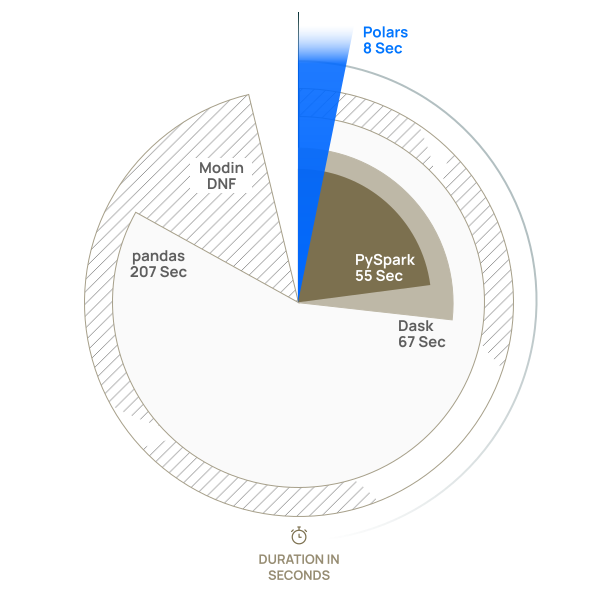
The backend for interacting with SQL databases is sqlalchemy because it supports async features and is the de-facto standard for communicating with SQL databases.
- MySQL
- PostgreSQL
- SQL Server
- Mongodb
univorm is async first. It means that if an async driver is available for a database dialect, it will leverage the async driver for better performance when applicable. SQL Server driver PyMSSQL does not have an async variation yet.
- PyMongo for Mongodb. Currently async support is in beta but since PyMongo is natively supporting async features, it's safer to use it rather than a third party package like Motor.
- Asyncpg for PostgreSQL.
- AioMySQL for MySQL.
Have docker compose, tox and uv installed. Then run docker compose up -d. Create the environment
uv venv
uv sync --dev --extra formatting --extra docs
uv lock
Then run tox -p